

Beyond Visualization: Building Strategic Data Partnerships
Lessons from a year of transformation: navigating AI, deepening partnerships, and staying human-centered. This is a post on our reflections on AI and our work moving forward as a team.


Over the past year, we’ve learned something fundamental: the most valuable partnerships aren’t just about delivering great work—they’re about becoming essential to how our clients think about and use their data.
There are mainly two ways in which you can generate value for your client. You either:
Support them to reduce costs through increased efficiency and better resource utilization; or
You increase their revenue through better insights, data-driven products, and strategic advantages.
You could argue that there are more categories. But ultimately, all services fall into these broad groups: you either do something better than your client or help them improve at what they do. I’ve learned that you become an essential partner when you can demonstrate how your work impacts your client’s results.
This is exactly what we’ve been focusing on over the past year—and what you will hear and see more from us: building and maintaining strategic partnerships to help organizations transform the way they consume and use their data.
The AI shift and how it impacted our work
Information is and always will be a valuable asset. But knowing how to use it sets apart those who effectively incorporate data from those making false promises. It doesn’t matter how impressive your data lake is - the truth remains that if you don’t train the people who create or use these systems, you’ll end up with more data that no one looks at. Some can make magic happen with Excel sheets, while others drown in dashboard overload.
And AI tools only make it worse. If someone didn’t know how to use the information before, now that there’s a system processing it for them and spitting out very confident answers, which no one fully understands the rules for, people tend to assume what they have is good enough—a dangerous combination of lack of critical thinking and machine assertiveness.
Although most are going this route, we have seen that using Artificial Intelligence for data processing, analysis, and visualization is still a high risk—one we are not willing to take.
The past months have shown that the industry we focused on for years, more specifically, the data visualization industry, is becoming more part of services, somewhere between a communication agency and a tech and information company.
Recently, we reflected internally and interviewed clients to define ourselves better. During this process, we realized we have always been more than a company that presents data — we are a trusted strategic partner in designing and creating tools that enhance understanding and adoption.
A few examples of how we see it happening:
Not only designing reports or presentations, but also:
a. Finding errors in statistical analysis (especially when we don’t conduct them initially);
b. Helping tailor the findings and highlights;
c. Building internal tools that make generating visualizations easier and faster for the design team.
This work has been crucial to ensuring the accuracy of the final deliverable and reducing the number of reviews during the process.
Not only designing the web interface on how people consume data, but also:
Interviewing customers and analyzing the patterns from previous platforms to diagnose how it can be improved, building their UX/UI journey;
Reviewing and adapting entire branding systems to guarantee accessibility;
Designing scalable, adaptable, and documented components;
Testing with real users and providing continuous support for the development of the tool to ensure the work is being implemented from strategy to final deliverable.
This guarantees strategic and scalable product design, along with a trusted team that learns with the client from beginning to end.
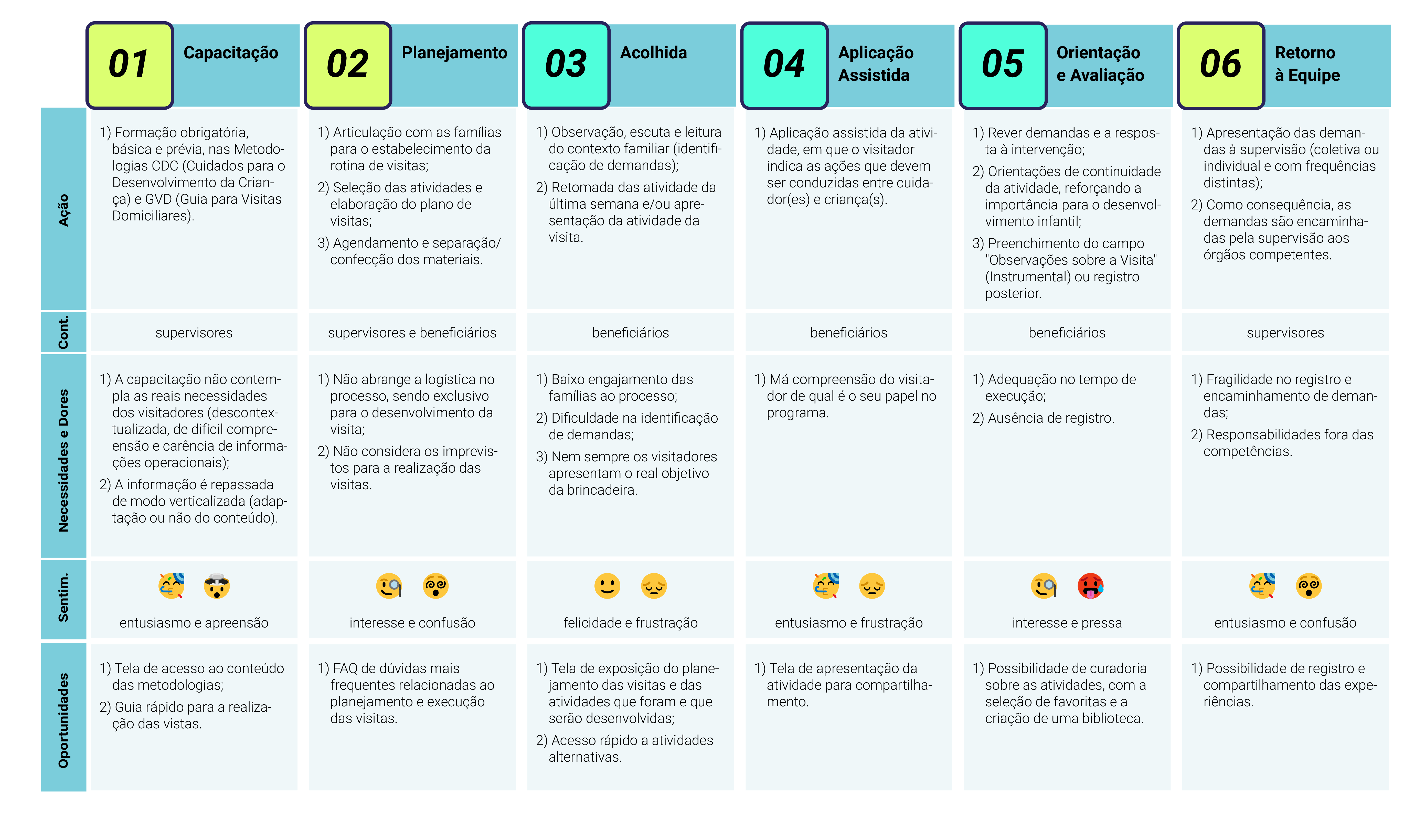
Not just creating a new content and information website, instead:
Designing the methodology and the processes for the data to be continuously analyzed;
Advising on technology and implementing the new tech with the client’s team;
Training the team to implement the new processes;
Designing a toolkit for use by the organization.
This reduces technological friction and increases adoption.
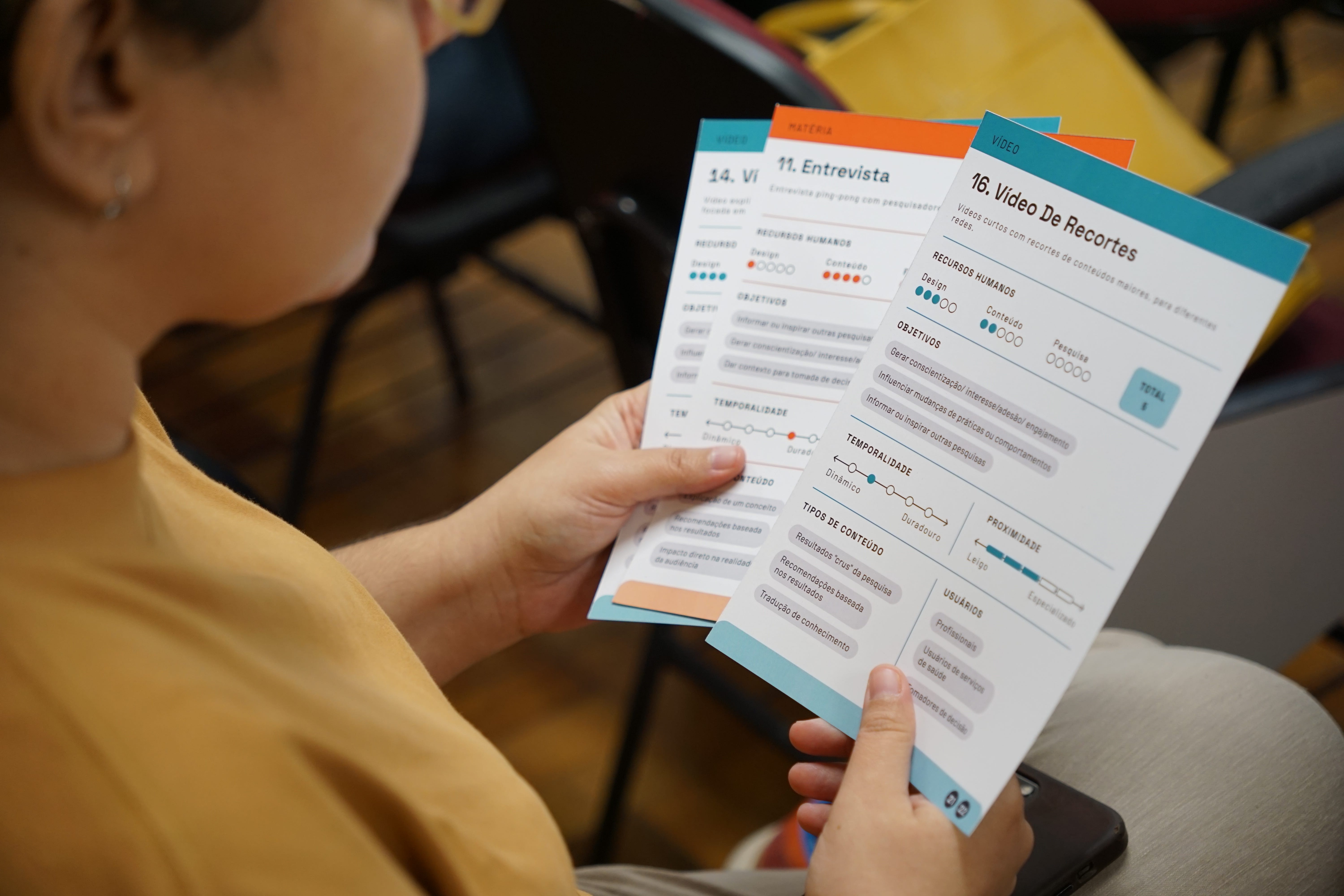
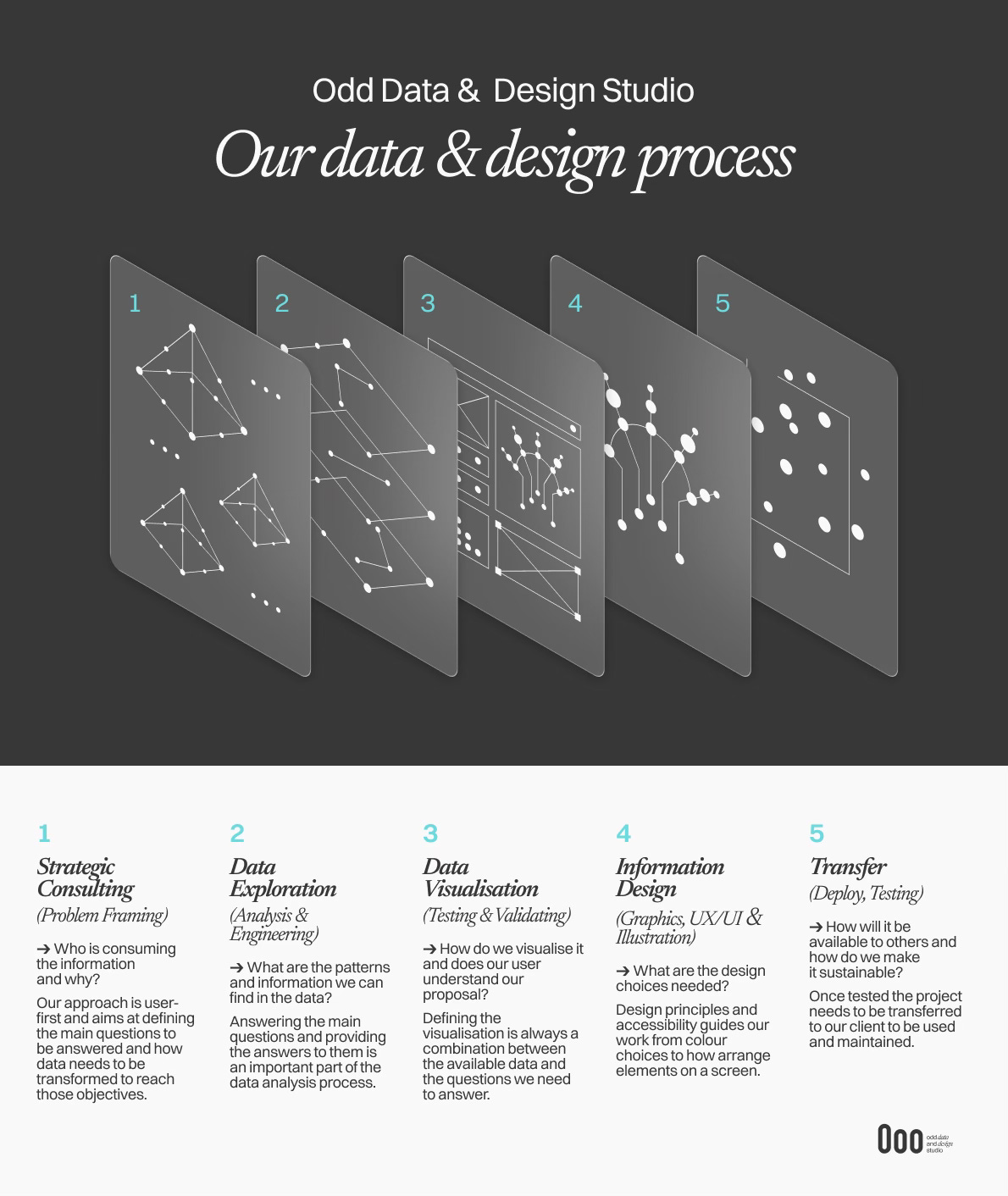
These are just some examples of things we have created that come with the responsibility to design with data, but don’t fully represent our work. We classify our work into five stages to better accommodate all we do. Some projects may have all of them, and some may not.
But they are as follows. You can find more about them on our new website.
Where does AI fit into all of this?
After months of testing and using AI, this is where we find it the most helpful:
Quickly prototyping tools, delivering ready-to-test prototypes in less than a month;
Testing the viability of ideas and automations without investing development time;
Connecting multiple workflow tools that accelerate data collection and organization;
And the day-to-day tasks we have seen other companies do, such as automating tasks and workflows, following guidelines and pre-established frameworks, and summarising materials (which are later always reviewed).
AI is transforming our industry, and we have been placing it where it belongs: pushing its limits in our processes so we can gradually support our clients in integrating it into theirs. We believe that being data literate means leading AI adoption, understanding when and where it is necessary, and, most importantly, recognizing where it is not.
So far, we do not believe AI is reliable for:
Analyze complex data sets we are not fully familiar with;
Handle sensitive data in all its forms;
Write and generate text independently and answer complex questions (this text was first written by me and then reviewed with AI suggestions - I am using Claude for now);
Generate ideas (it can start from a blank page, but we find that limits our creativity);
Design solutions or suggest interface improvements, unless they are based on interviews or inputs we provided and verified;
Be our primary source of research.
When people outsource their decision-making to machines, we return to the basics and focus on the root of problems, not the fancy, shiny new thing. And understanding that our clients face similar experiences, we have shifted most of our work from project-based to fee-based, continuous support. We help our clients build internal and external data tools, not only as data visualization experts but also as strategic partners. This approach allows us to understand needs and apply our expertise across multiple areas, not just the ones they tell us, but the ones we identify, prioritize, design, and build together.
Our goal is to ensure that our clients’ data works for them. We help unlock its power through smart design, intuitive tools, and human-centered solutions. From custom dashboards to team training, we transform complexity into clarity and ideas into action. In other words, we make data unforgettable and not easy to ignore.
So what are we delivering and how?
As I said in the beginning, either by using better resources or by making valuable tools:
Internal solutions and micro tools based on data
(making better use of resources):
Provide clarity and visibility for processes, optimizing internal roles, responsibilities, and making life simpler and automated when possible;
Design and refine KPIs and indicators that allow for monitoring, assessing, and planning their work;
Design and develop interfaces that allow them to interact with their own information in a clearer and accessible way;
Support collecting and validating data to guarantee the quality of information and processes;
Select technologies and systems that allow for continuous growth and scalability;
Build data-driven decision models that help utilize the data and guide decision processes.
External solutions and tools based on data
(creating value for their customers and stakeholders):
Map and understand repetitive processes that can generate external value for clients’ customers and stakeholders;
Create data-driven products that become revenue streams or competitive advantages;
Design customer-facing dashboards and reporting tools that enhance client relationships;
Build automated systems that turn internal data into external insights, reports, or services;
Develop scalable data products that can be licensed or sold to multiple markets;
Transform complex data into accessible public-facing tools that establish thought leadership.
A new approach to partnership
This strategic shift has also changed how we work with clients. Instead of the traditional project-based model—where we deliver a dashboard, present findings, and move on—we’re transitioning to ongoing partnerships that deliver consistent value over time. This means regular check-ins, continuous optimization, iterative improvements, and strategic guidance that evolves with the client’s business needs.
We’ve found that the most impactful work happens not only in the initial delivery but also in the months that follow: when systems need refinement, new data sources emerge, business priorities shift, and tools need to grow with the organization. Our approach ensures we’re there for these crucial moments, acting as an extension of the team rather than an external vendor.
Moving forward
The shift we’re experiencing isn’t just about adapting to new technology—it’s about recognizing that data literacy and strategic thinking will always be more valuable than any tool. While others chase the latest trend, we’re doubling down on fundamentals: understanding problems deeply, designing solutions thoughtfully, and ensuring humans remain at the center of decision-making.
This means we’re building the infrastructure, processes, and capabilities that make our clients more data-literate, strategic, and ultimately more successful.
We’re still Odd, but we’re Odd with a more straightforward mission: to be the bridge between data and decisions, between information and insight, between tools and transformation, whether it is building an AI or not.
Ready to partner with us?
We’re intentionally keeping our client roster small to maintain the quality and attention each partnership deserves. Currently, we have the capacity for one or two new strategic partnerships in the coming months. If you’re looking to transform how your organization understands and uses data—not just create pretty charts—we’d love to explore how we can work together.
Love this perspective, and it realy builds on your previous thoughts about actionable insights, reinforcing how critical human-centric training is for deriving true value from even the most impressive data lake infrastructure, a point often overlooked in the rush for new tech.